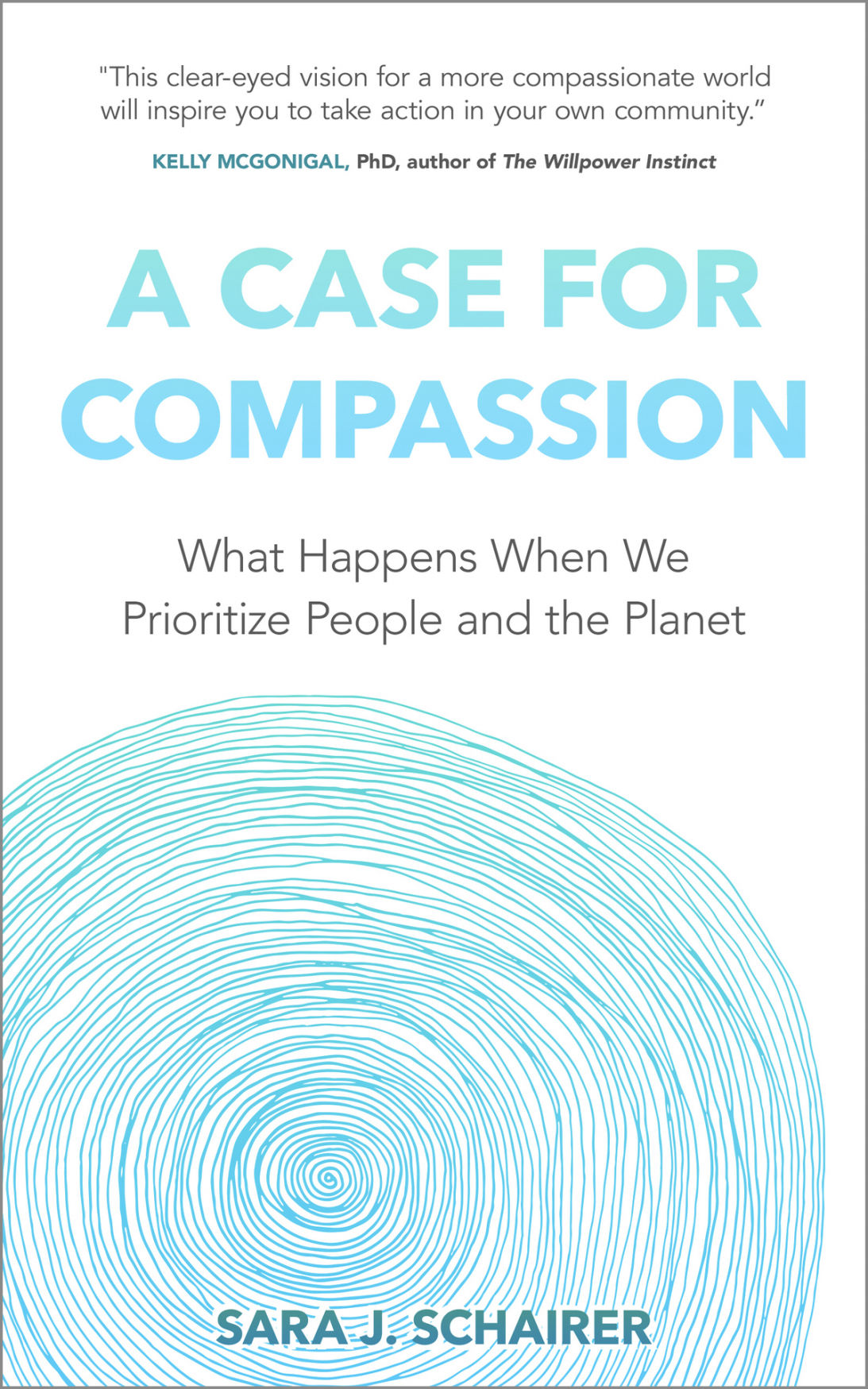
In the book, A Case for Compassion, Sara Schairer poses a compelling question, “What would happen if we made people and the planet our priority instead of growth and profit?”
Schairer, for those of you not familiar with her, is a Stanford-certified instructor of Compassion Cultivation Training and founder of Compassion It, a non-profit organization with a mission to inspire daily compassionate actions and attitudes. She has taught at the UCSD Center for Mindfulness, Kaiser Permanente, and the Naval Medical Center. She has also led compassion training in Africa sponsored by the Botswana Ministries of Health and Education.
The book begins with Schairer’s own journey from her father’s death and a painful divorce to how she became focused on compassion and how it can change the world.
From there, she tells us how she began Compassion It. Starting with an idea formulated while watching an episode of Ellen through to the creation of a movement where people from all over the world have benefited, Schairer challenges us to think about what might happen if we change our thinking, our habits, and our ways of living and working.
Then begins what I like to call the educational portion of the book. It begins with a firm definition of what compassion is and how it is like and unlike empathy. Then Schairer presents how compassion can work to benefit various different environments including the correctional system, education, health care, our workplaces, and law enforcement. To organize things, each section is structured around four questions inspired by the Four Noble Truths from Buddhist philosophy.
- What is the problem?
- What is the cause of the problem?
- What does a healthy system look like?
- What is the path to healing?
Schairer then uses a combination of stories and anecdotes to answer those questions for each different environment. Along the way, we hear stories from correctional officers, teachers, a neurosurgeon, employees in a bakery, and a police chief about how compassion can make a difference and how it can be taught and developed even among the most unlikely people.
Overall, Schairer presents a good case for how compassion is and should be an everyday practice for all of us not just those in charities or religious institutions.
If you are interested in or intrigued with what compassion is exactly, how it works, how it matters, and how it can make a huge difference in your life and the lives of those you touch, pick up this book.
As a final note, I met Sara recently and she is a delightful person who radiates compassion, optimism, and a resilient determination that moves and encourages. Here’s a taste to show you what I mean: “…when you live with compassion as your guide, you can’t ignore suffering and injustice anymore. Compassion grabs your blinders, throws them on the ground, and stomps on them.” Schairer believes in this cause and she inspires me to believe too. As she says in the final words of the book, “Let’s go.”
==> If you liked this post and want to know when new posts are published, CLICK HERE to subscribe.
 Neal Woodson
Schairer makes a strong case for the significance of cultivating kindness and empathy in today’s society through her persuasive arguments and personal tales. Everybody who wants to improve themselves and their communities should read this book.
this is a comment
The compassion cultivation tips are practical and effective.