“Humanity is not defined by the evil done by a few. It is defined by the goodness done by the majority.” –Chris Anderson
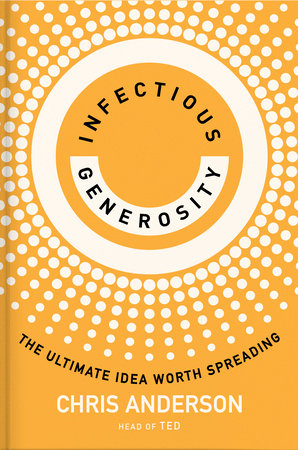
Chris Anderson’s book, Infectious Generosity, is a worthy read. To begin, he poses a key question that weaves throughout the book: “Am I (are you) a net giver or a net taker?” It’s bold and in your face, but it’s the right question for our time.
We live in an age where messages and images can virally spread in a way like never before. And with so much of what is spreading being negative and divisive, Anderson makes a case for spreading something better—something generous and altruistic that will help rather than hinder. To make that case, he shares why giving is needed, why it is good for us, how to do it, and how the world will be transformed if we do.
In the first section, he recounts a foundational story about a study where 200 people were given $10,000 to spend in 3 months. The researchers wanted to see how much was used selfishly and how much was given generously. The results? 68% of the money was used in ways that benefited others. In fact, in one case, the entire $10,000 was given in mini-grants of $500 to worthy causes. The finding? Contrary to what we might be led to believe, humans are not fundamentally greedy, selfish a**holes—at least not the majority of us—most of us have a natural streak of goodness and compassion… thank heavens.
To press the point home, Anderson gets into some science about why this is and why it makes us happy. We learn about the chemicals in our biology that cause prosocial generosity and helpfulness and why that inclination is a key to our survival. We also learn about some psychological reasons why giving benefits our mental health.
Once we have the whys, we get some practical hows. We learn that generosity doesn’t have to involve money. It can manifest itself in everyday actions ranging from opening the door for someone to helping a friend move to a new home. Anderson points out that these small acts can be, and often are, the sparks that ignite larger acts of generosity.
From there, we get some very helpful tips on how to bring money into the generosity picture. Anderson pays particular attention to two monetary giving strategies: 1) giving 10% of total wealth and 2) giving 2.5% of income. He points out how these are different and why we might go with one tactic over the other. And while he suggests trying to implement one of these plans into your financial life, he stresses the fundamental importance of just giving whatever you can.
The final section of the book lays out a kind of visionary look at what the world could be if we were all just a little more generous. Many of our world’s challenges could be overcome. He makes it clear that we not only have the ability, we have the resources; all we need is the willingness. It’s a closing that bursts with inspiration and optimism.
I highly recommend this book, not just for the read but for what I hope will motivate more kindness, inclusion, and action for a better world.
To learn more, go to https://www.infectiousgenerosity.org.
Also check out https://www.ted.com/dubbing/chris_anderson_it_s_time_for_infectious_generosity_here_s_how?audio=en&language=en
==> If you want to know when new posts are published, CLICK HERE to subscribe.
 Neal Woodson