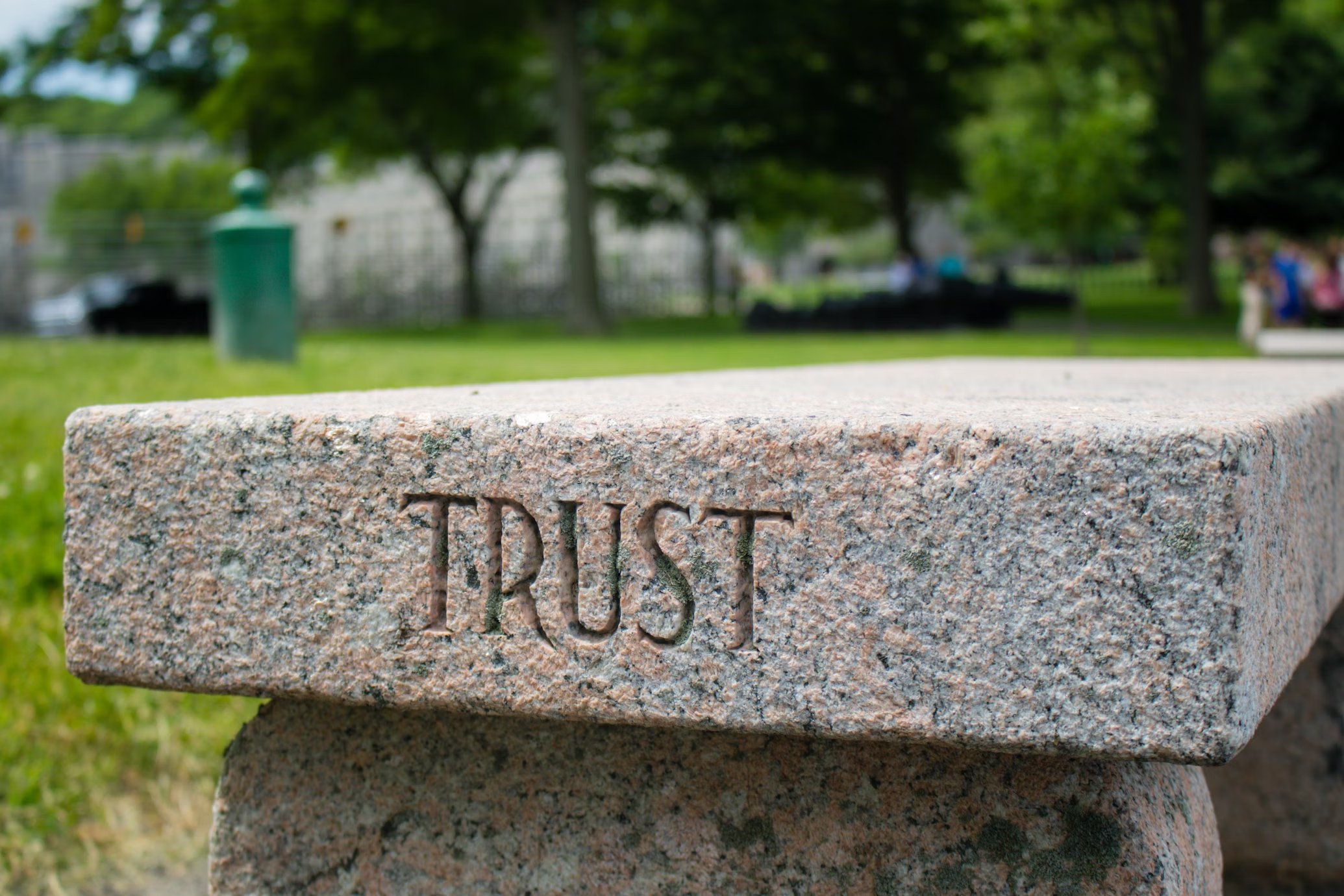
Trust is the foundation of relationships. Without it, even the most superficial, transactional relationships cannot stand. We humans are wired, for survival reasons, to seek out trust. If we are not confident in others, our safety could be in jeopardy.
Imagine two witnesses in a trial. One is an expert in their field but has lied about some financial dealings. The second has an impeccable history—no lying, cheating, or stealing—but their expertise is less than stellar.
Is either to be trusted? Not likely. They each fail a part of the two-part requirements of trust.
- Competence: Confidence that a person, group, or organization possesses the requisite knowledge to be credible or skills to do what needs to be done. It answers the question, can you keep your promises?
- Character: Confidence that a person, group, or organization will adhere to a set of ethical/moral principles that is generally acceptable. It answers the question, will you keep your promises?
These factors are as old as humankind. In our earliest prehistory, discerning other people’s ability (competence) and intentions (character) was critical to survival. If a stranger couldn’t help with bringing back food and fighting against predators, what good were they? And if they were only in it for themselves and wouldn’t share or might even kill everyone and take everything, it would be fatal.
While our day-to-day trials might not be so dramatic, these factors still hold today and are still the chief determinants for extending trust, however, we have found that they are not equals.
Typically, most of us look at competence with some flexibility. When someone makes a mistake, our confidence may decline, but it’s not an immediate deal breaker. Everyone, ourselves included, makes mistakes. Our empathy muscle kicks in. Competence shortfalls and failings can be overcome and trust more easily restored.
However, when failures of character (dishonest behaviors) rear their head, they provoke much different reactions. While a skill or knowledge mistake may create some doubt, a single dishonest act can be taken so seriously as to sever a relationship. The suspicion and anxiety that spring from dishonesty can linger far longer than signs of incompetence and take much longer to heal if any healing takes place at all.
In either case, it is clear that lapses can, in one case, be damaging or, in the other case, potentially game-ending. This is why I put forward a third requirement for trust. Consistency.
To show up as competent, you must do it over and over. It must be proven. There must be a track record.
Likewise, for character to be a hallmark, it must be demonstrated day in and day out as well.
This gives us the trust formula: be able, be honest, and be both all of the time, not just when it suits you, and not just for some.
Big questions. How do you measure up? How does your workplace measure up? And how does your business measure up to customers?
==> If you liked this post and want to know when new posts are published, CLICK HERE to subscribe.
 Neal Woodson